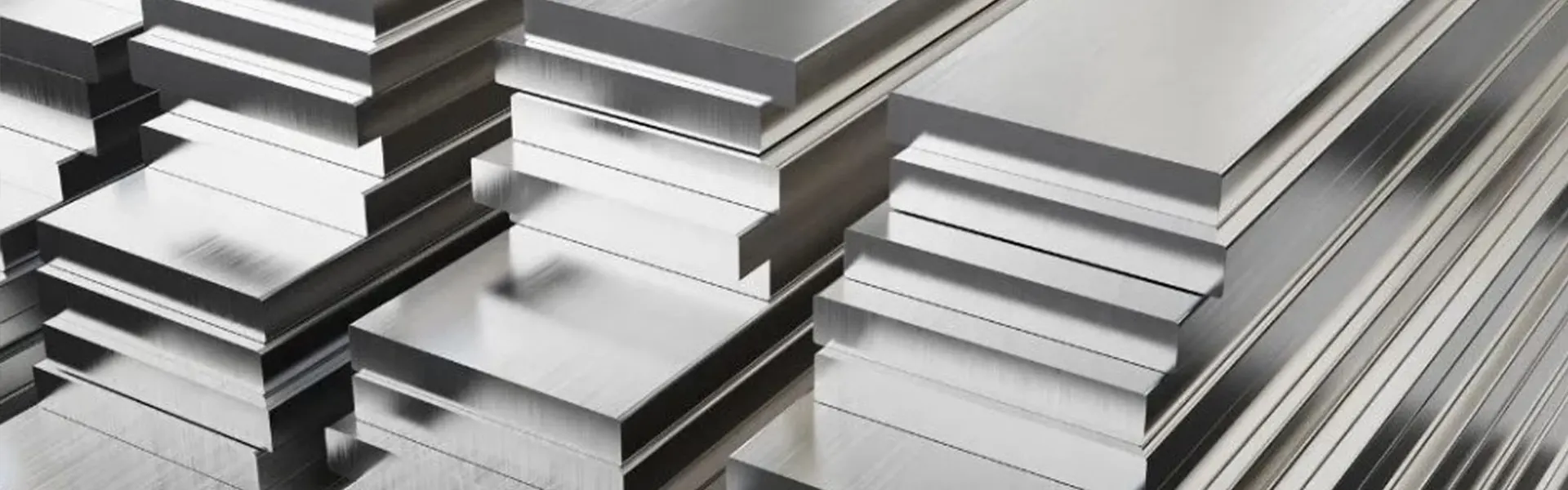
stainless steel coil/plate
stainless steel coil/plate

- JIS G4304 / G4312 SUS 301 Stainless Steel Composition & Work‑Hardening Properties
- SUS 301 is the high‑strength austenitic stainless steel grade defined in JIS G4304 (hot‑rolled) and JIS G4312 (cold‑rolled). With 16–18% chromium and 6–8% nickel, it has a lower nickel content th
- Read more »

- ASTM A240 S32760 Stainless Steel Composition & High‑Alloy Duplex Properties
- S32760 (Zeron 100) is a high‑alloy duplex stainless steel containing chromium, nickel, molybdenum, nitrogen, copper, and tungsten. With a PREN value of 40–45, it offers outstanding resistance to pit
- Read more »

- ASTM A240 S32750 / 2507 Stainless Steel Composition & Super Duplex Properties
- S32750 / 2507 is a super duplex stainless steel containing 24–26% chromium, 6–8% nickel, 3–5% molybdenum, and nitrogen. With a PREN value above 40, it provides exceptional resistance to pitting, cr
- Read more »

- S31803 Stainless Steel Composition & Standard Duplex Properties
- S31803 is a standard duplex stainless steel containing 21–23% chromium, 4.5–6% nickel, 2.5–3.5% molybdenum, and nitrogen. Its performance is similar to S32205, though S32205 has a narrower and opti
- Read more »

- S31803 Stainless Steel Composition & Standard Duplex Properties
- S31803 is a standard duplex stainless steel containing 21–23% chromium, 4.5–6% nickel, 2.5–3.5% molybdenum, and nitrogen. Its performance is similar to S32205, though S32205 has a narrower and opti
- Read more »

- S32205 / 2205 Stainless Steel Composition & Duplex Corrosion‑Resistant Properties
- S32205 / 2205 is the most widely used duplex stainless steel, containing 22–23% chromium, 4.5–6.5% nickel, 3–3.5% molybdenum, and nitrogen. It combines ferritic and austenitic phases, offering twic
- Read more »

- S32304 Stainless Steel Composition & Duplex Corrosion‑Resistant Properties
- S32304 is a standard duplex stainless steel containing 22–24% chromium, 3–5% nickel, nitrogen, and small amounts of molybdenum. It offers excellent resistance to pitting and crevice corrosion, with
- Read more »

- S32101 Stainless Steel Composition & Lean Duplex Properties
- S32101 is a lean duplex stainless steel containing approximately 21–22% chromium, low nickel (1.3–1.7%), nitrogen, and manganese. It offers twice the yield strength of austenitic grades while mainta
- Read more »

- 420 Stainless Steel Composition & High‑Hardness Martensitic Properties
- 420 (UNS S42000) is a high‑hardness martensitic stainless steel containing 12–14% chromium and elevated carbon levels (0.15–0.40%). It can be hardened above 50 HRC through heat treatment, offering
- Read more »

- 420 Stainless Steel Composition & High‑Hardness Martensitic Properties
- 420 (UNS S42000) is a high‑hardness martensitic stainless steel containing 12–14% chromium and elevated carbon levels (0.15–0.40%). It can be hardened to above 50 HRC through heat treatment, making
- Read more »

- 416 Stainless Steel Composition & Free‑Machining Martensitic Properties
- 416 (UNS S41600) is one of the most free‑machining martensitic stainless steels, enhanced with sulfur to improve turning, drilling, and threading performance. As a typical free‑machining stainless s
- Read more »

- 410 Stainless Steel Composition & Martensitic Properties
- 410 (UNS S41000) is a martensitic stainless steel containing 11.5–13.5% chromium with very low nickel content. It is heat‑treatable and capable of achieving high strength and hardness through quench
- Read more »