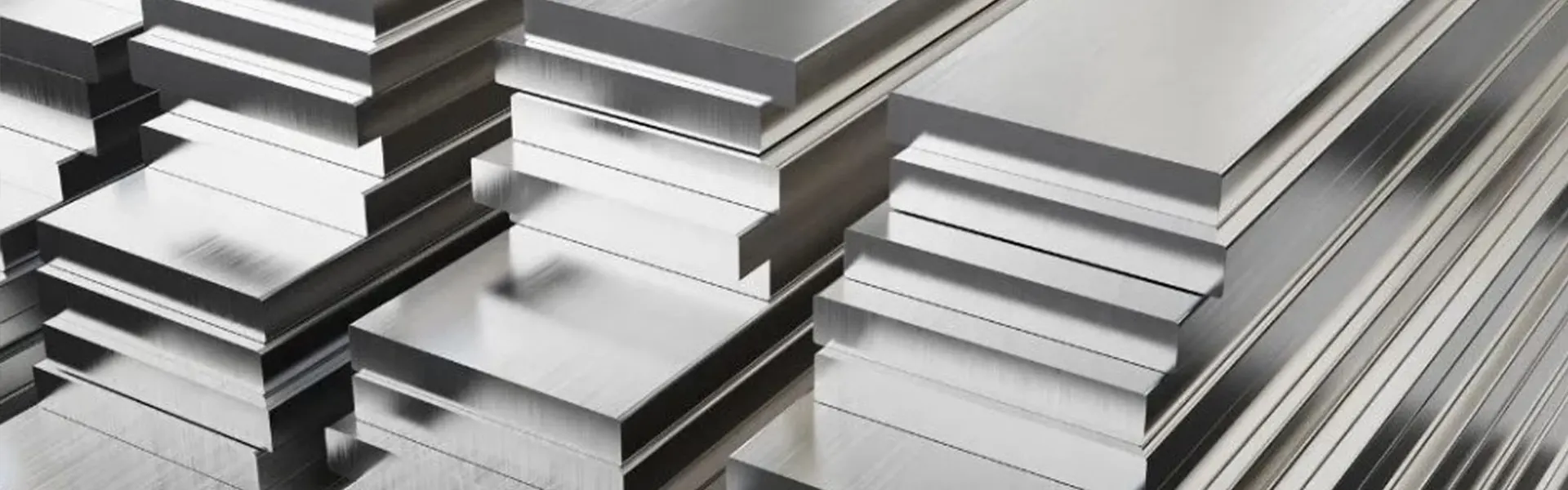
stainless steel coil/plate
stainless steel coil/plate

- 1.4571 Stainless Steel Composition & High-Temperature Stability
- 1.4571 (X6CrNiMoTi17-12-2) is a titanium-stabilized austenitic stainless steel grade specified under EN 10028-7 and EN 10088-2, equivalent to 316Ti. Its composition includes 16.5–18.5% chromium, 10.5
- Read more »

- 1.4429 Stainless Steel Composition & High-Corrosion Resistance
- 1.4429 (X2CrNiMoN17-13-3) is a nitrogen- and molybdenum-alloyed austenitic stainless steel grade under EN 10028-7 and EN 10088-2, classified within the 316LN family. With 16.5–18.5% chromium, 12–14%
- Read more »

- 1.4432 Stainless Steel Composition & High-Molybdenum Performance
- 1.4432 (X2CrNiMo17-12-3) is a high-molybdenum, low-carbon austenitic stainless steel grade specified under EN 10028-7 and EN 10088-2. As an enhanced version of 316L, it contains 16.5–18.5% chromium,
- Read more »

- 1.4436 Stainless Steel Composition & Enhanced Pitting Resistance
- 1.4436 (X3CrNiMo17-13-3) is a high-molybdenum austenitic stainless steel grade specified under EN 10028-7 and EN 10088-2. With 16.5–18.5% chromium, 12.5–14.5% nickel, and 2.5–3% molybdenum, it offe
- Read more »

- 1.4404 Stainless Steel Composition & Corrosion-Resistant Properties
- 1.4404 (X2CrNiMo17-12-2) is the low-carbon molybdenum-alloyed austenitic stainless steel grade specified under EN 10028-7 and EN 10088-2, equivalent to 316L. Its composition includes 16.5–18.5% chrom
- Read more »

- 1.4401 Stainless Steel Composition & Corrosion-Resistant Properties
- 1.4401 (X5CrNiMo17-12-2) is a molybdenum-alloyed austenitic stainless steel grade specified under EN 10028-7 and EN 10088-2, equivalent to the widely used 316. Its composition includes 16.5–18.5% chr
- Read more »

- 1.4306 Stainless Steel Composition & Low-Carbon Properties
- 1.4306 (X2CrNi19-11) is a low-carbon austenitic stainless steel grade specified under EN 10028-7 and EN 10088-2. As a high-purity variant of the 304L family, it contains 18–20% chromium, 10–12% nick
- Read more »

- 1.4303 Stainless Steel Composition & Formability
- 1.4303 (X4CrNi18-12) is a high-nickel austenitic stainless steel grade specified under EN 10028-7 and EN 10088-2. Positioned within the 301/305 family, it contains 17–19% chromium and 11–13% nickel,
- Read more »

- 1.4305 Stainless Steel Composition for Free-Machining Applications
- 1.4305 (X8CrNiS18-9) is the free-machining austenitic stainless steel grade specified under EN 10028-7 and EN 10088-2, equivalent to the widely used 303. Its composition includes 17–19% chromium, 8–
- Read more »

- 1.4541 Stainless Steel Composition for High-Temperature Stability
- 1.4541 (X6CrNiTi18-10) is a titanium-stabilized austenitic stainless steel grade specified under EN 10028-7 and EN 10088-2, equivalent to the widely used 321. Its composition includes 17–19% chromium
- Read more »

- Martensitic Stainless Steel: Heat‑Treatable High‑Strength Alloy for Wear‑Resistant Applications
- Martensitic stainless steel is defined by its ability to be hardened through heat treatment. After quenching and tempering, it achieves high strength, high hardness, and excellent wear resistance whil
- Read more »

- Ferritic Stainless Steel: Cost‑Efficient Chromium‑Based Alloy for Medium‑Corrosion Applications
- Ferritic stainless steel is a chromium‑based alloy that maintains a stable ferrite structure at room temperature. It offers strong resistance to stress corrosion, a low thermal expansion coefficient,
- Read more »